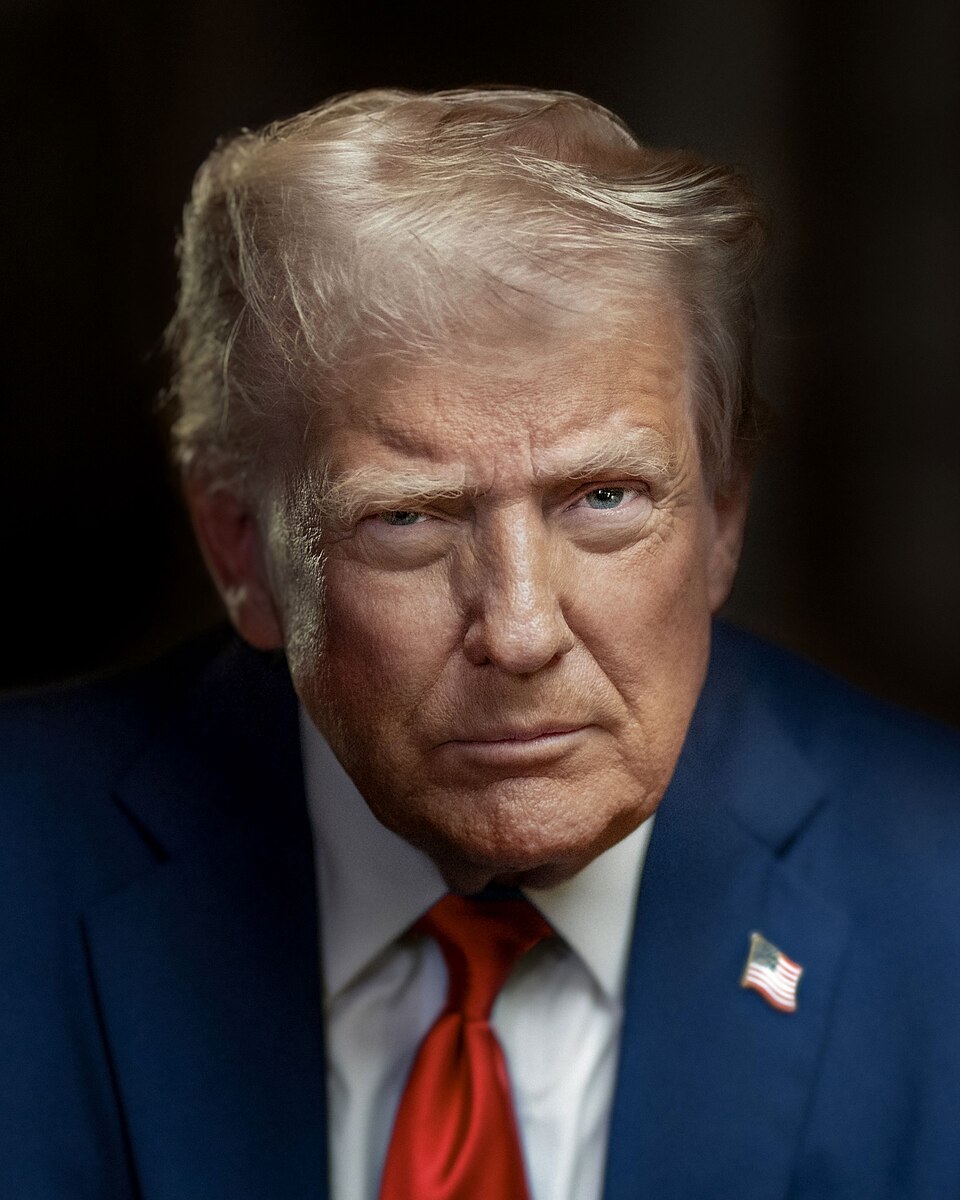
Decoding Donald Trump's Neck Spot: The White House Doctor's Explanation
The health of prominent public figures, particularly those in the highest office, invariably becomes a subject of intense public and media scrutiny. When a visible anomaly appears, such as the recent red mark on Donald Trump's neck, speculation can quickly ignite. Recent public appearances by the former President brought an unexpected focal point: an noticeable redness on the right side of his neck. This observation rapidly fueled a fresh wave of discussions regarding his health, prompting an official response from the White House.
In an era where every detail is magnified under the digital lens, even a minor skin irritation can spark widespread debate. Donald Trump, known for his robust self-assessments of his "perfect" health, found himself once again at the center of a health-related discussion. This article delves into the specifics of what was observed, the official explanation provided, and how this incident fits into a broader pattern of public interest in the health of the 79-year-old, soon-to-be 80-year-old, political figure.
The Visible Anomaly: What Caught the Public Eye
During recent public engagements, attention quickly gravitated towards a distinct patch of redness visible on Donald Trump's right neck. Peeking out from beneath his usual white collared shirt, the area, reportedly extending just below his ear, was a clear and unusual sight. In a world saturated with close-up camera angles and instant social media analysis, such a prominent visual detail was bound to generate questions.
For a figure as recognizable and often controversial as Donald Trump, every public appearance is meticulously observed. His characteristic tanned complexion made the red spot appear even more pronounced, leading many to immediately wonder about its origin and implications for his overall health. Given his age and his history as the oldest person ever elected to the U.S. presidency, any perceived health issue naturally draws heightened concern. This visible anomaly quickly became a talking point, circulating across news outlets and social media platforms, with armchair diagnosticians weighing in on potential causes.
White House Clarification: Dr. Barbabella's Official Statement
Responding swiftly to the burgeoning speculation surrounding the former President's health, the White House issued a statement attributed to Trump’s personal physician, Dr. Sean Barbabella. The clarification aimed to put an end to the conjectures, offering a straightforward explanation for the visible trump fleck hals.
According to Dr. Barbabella, the redness was a result of President Trump using a "common cream for the prevention of skin irritations" on the right side of his neck. The physician confirmed that this cream had been prescribed to him by a doctor from the White House medical team. This explanation sought to frame the situation as a routine dermatological matter rather than a symptom of a more serious underlying condition.
The statement further detailed that the President had been applying the cream for approximately a week, and the redness was expected to persist for "a few weeks." While this provided clarity on the *treatment*, it notably did not delve into the specific cause of the initial skin irritation itself. This absence of detail, while perhaps medically benign, still left some room for further public discourse on the initial trigger for the irritation. Nevertheless, the official narrative firmly positioned the red mark on Trump's neck as a temporary, managed condition.
- Key takeaway from the statement: The spot is a temporary skin irritation, treated with a prescribed cream.
- Duration: Expected to last for several weeks.
- Origin: Prescribed by a White House doctor for prevention of skin irritations.
A Pattern of Speculation: Trump's Past Health Incidents
The recent trump fleck hals incident is far from the first time Donald Trump's health has become a topic of public discussion. Throughout his political career, and particularly during his presidency, various physical observations have led to waves of speculation, often accompanied by somewhat unconventional explanations from his team or himself.
Previous Health Scrutiny Highlights:
- Bruises on the Hand: On multiple occasions, visible blue marks or bruises on Trump's hand drew significant attention. The explanations varied:
- The White House attributed them to "vigorous handshaking."
- Trump himself suggested he might have "hit a table."
- Another explanation involved a high-five with then-Attorney General Pam Bondi.
- He also pointed to his use of aspirin, a blood-thinning medication, noting, "Take aspirin if you care about your heart, but don't take aspirin if you don't want little bruises." These areas were frequently observed to be covered with makeup during public appearances.
- "Closed Eyes" Incidents: Videos from public events occasionally showed Trump with his eyes closed for extended periods, leading to suggestions that he might have been falling asleep. Trump vehemently denied these claims, asserting they were moments of "relaxation" or "boredom," often juxtaposing himself against his political rival, Joe Biden, whom he frequently derided as "Sleepy Joe" for similar observations.
- MRI vs. CT Scan Confusion: There was some confusion regarding a medical scan Trump underwent. He initially mentioned having an MRI in October, a radiological procedure for detailed organ and tissue examination. However, it was later clarified by both Trump and Dr. Barbabella that the procedure was, in fact, a CT (Computed Tomography) scan – a faster diagnostic tool. Dr. Barbabella confirmed the CT scan was performed to "definitively rule out any cardiovascular problems," providing reassurance regarding his heart health.
These recurring instances highlight a consistent pattern: a visible physical anomaly, followed by public curiosity, and then an official explanation that sometimes feels a little out-of-the-ordinary. This history undoubtedly contributes to the immediate and intense reaction whenever a new detail, like the red mark on Trump's neck, comes to light.
Beyond the Surface: Understanding Public Scrutiny of Presidential Health
The extensive focus on President Trump's health, including the recent trump fleck hals episode, underscores a fundamental aspect of modern politics: the intense public scrutiny directed at the health of world leaders. This goes beyond simple curiosity; it touches upon significant concerns for national and global stability.
Why is presidential health so scrutinized?
- Fitness for Office: The President holds immense power and responsibility. Their physical and mental health directly impacts their ability to make critical decisions, manage crises, and lead effectively. The public needs assurance that their leader is capable of handling the immense pressures of the job.
- Transparency vs. Privacy: While individuals are entitled to medical privacy, the occupant of the highest office often faces expectations of greater transparency. Striking a balance between these two can be challenging, as evidenced by the varied explanations offered for Trump's past health observations.
- Political Weaponization: Health can, unfortunately, become a political tool. Opponents may highlight perceived vulnerabilities, while supporters often downplay or dismiss concerns. This dynamic fuels speculation and makes objective assessment difficult.
- Aging Leaders: With an increasing number of older politicians in leadership roles globally, questions about age-related health issues are becoming more common. For a leader nearing 80, like Donald Trump, these concerns are particularly salient.
Tips for Interpreting Public Health Narratives:
- Seek Official Sources: Always prioritize information from official medical statements, like that provided by Dr. Barbabella. While not always exhaustive, these are the most authoritative.
- Avoid Self-Diagnosis: Resist the urge to draw medical conclusions based solely on images or brief video clips. Dermatological issues, for instance, can have numerous benign causes.
- Context is Key: Understand the political context in which health narratives are presented. Consider potential biases or motivations behind certain statements or criticisms.
The incident with the red mark on Trump's neck serves as a microcosm of these broader issues. It reminds us that for public figures, particularly those vying for or holding the presidency, even minor physical details can trigger extensive discussions about their fitness, resilience, and overall well-being.
Conclusion
The recent appearance of a red spot on Donald Trump's neck swiftly drew public attention, igniting a familiar cycle of health speculation. However, the White House, through Dr. Sean Barbabella, promptly addressed these concerns, clarifying that the mark was a result of a common, doctor-prescribed cream used to prevent skin irritations. This explanation positions the visible anomaly as a temporary and managed dermatological issue rather than a sign of serious illness. This event, much like previous discussions around hand bruises or moments of perceived fatigue, underscores the intense public and media scrutiny that presidential candidates and former presidents face regarding their physical well-being. While official explanations aim to quell fears, the constant spotlight on leaders' health remains a defining feature of modern political discourse, reflecting a societal demand for transparency and assurance in those entrusted with immense power.